
Last updated November 22, 2026
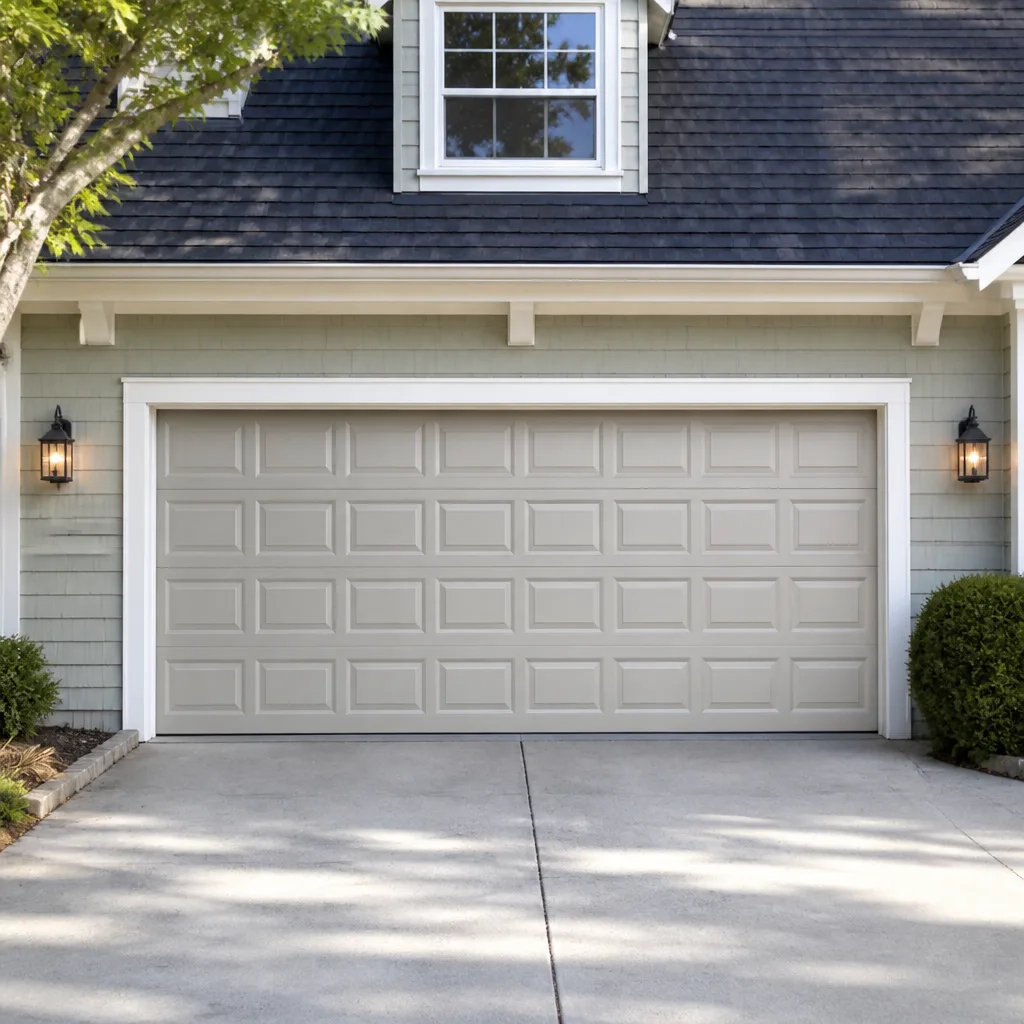 Raised-panel steel
 Carriage house
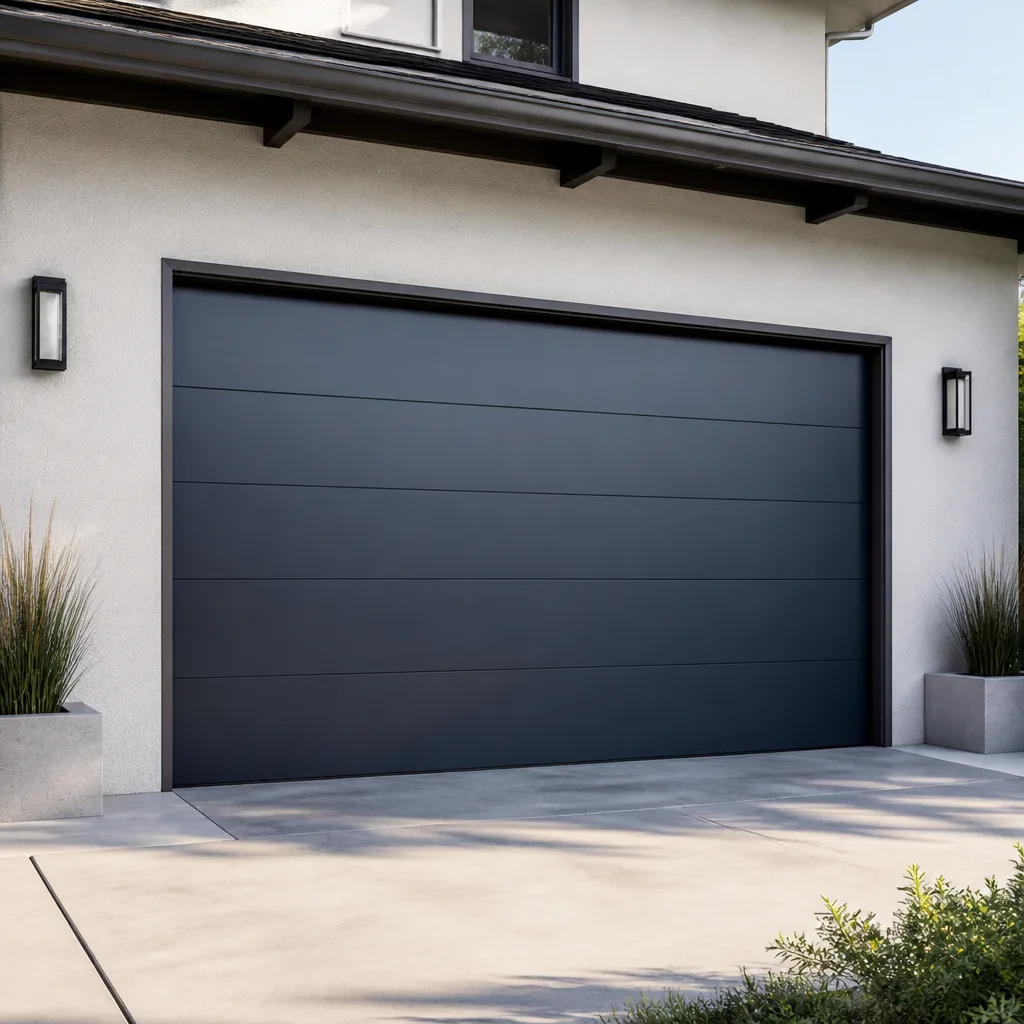 Modern flush
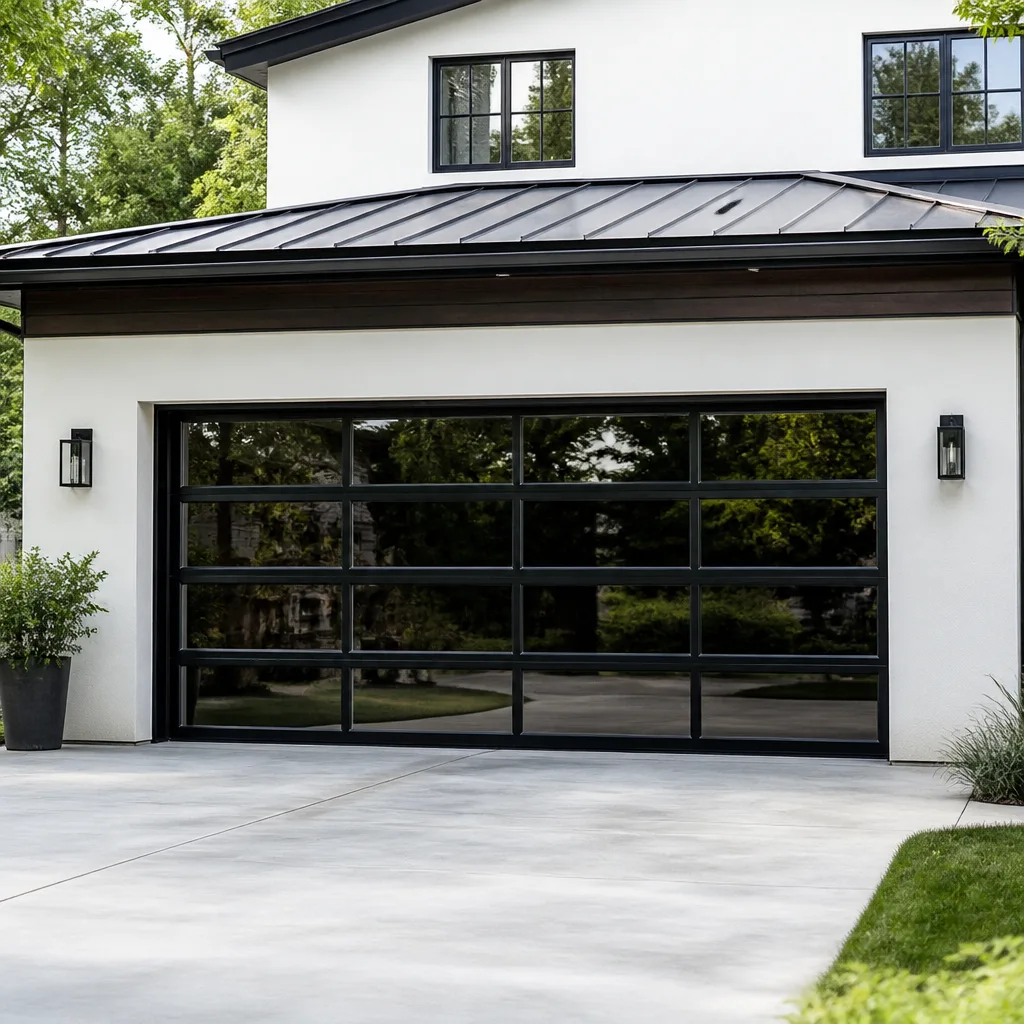 Full-view glass
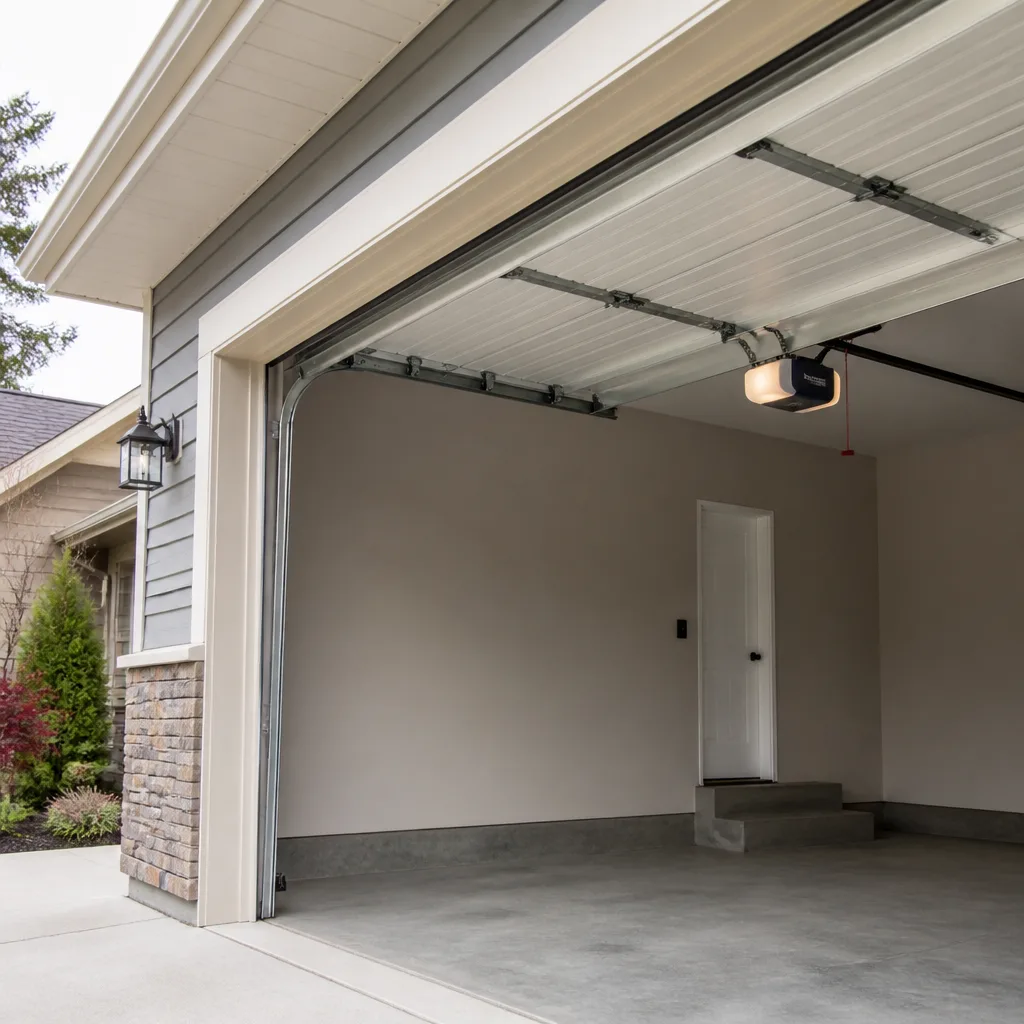 LiftMaster openers
 Chamberlain openers
Full 25-point door and opener safety check with every visit - springs, cables, rollers, tracks, and your LiftMaster or Chamberlain opener included
You get a price before we start. It does not change when the pro arrives.
Get your free estimateGarage Door Repair Maintenance Schedule: What to Do and When
Lubricating your springs once a year sounds responsible. But if you’re reaching for WD-40, you’re speeding up the corrosion you’re trying to prevent. That’s the trap with most garage door advice: it treats every moving part like it wears out on the same schedule. It doesn’t. A torsion spring might carry your door for roughly seven years before it quits, while a roller or hinge can fail in a single dry Virginia summer if it’s never touched. This guide breaks garage door maintenance into three separate clocks – monthly, seasonal, and annual – so you know what to check, what to clean, and what to leave alone. It’s written for Newport News homeowners who’d rather catch a worn cable early than come home to a door stuck half open.
Quick Answer
Most garage doors need a quick visual and listen-over once a month, light lubrication and a balance test each season, and a deeper inspection of springs, cables, and opener force settings once a year. The single most important rule: check and lubricate on schedule, but leave spring tension and cable replacement to a trained technician. A door that gets this basic rhythm avoids most surprise failures.
Styles & brands we work with
- Raised-panel steel
- Carriage house
- Modern flush
- Full-view glass
- LiftMaster openers
- Chamberlain openers
Table of Contents
- Why Three Cadences Beat One Annual Checkup
- The Monthly Walk-Around: Visual and Audio Checks
- The Seasonal Tasks: Lubrication, Balance, Seals
- The Annual Deep Check: Springs, Cables, Opener Force
- Spring Cycle Counts: Why Your Timeline Is Personal
- Which Lubricant Goes Where – and What Never to Use
- The One Task That Voids Most Warranties
- How to Keep a Maintenance Log
Why Three Cadences Beat One Annual Checkup
A garage door isn’t one machine. It’s a system of parts moving at different speeds under different stress. Group all of them into a vague “get it serviced once a year” plan and you’ll miss the failures that happen between visits.
Think about what actually moves. The torsion spring at the top twists and untwists every time the door opens – it’s under constant load, but it doesn’t corrode the way exposed metal down low does. The rollers roll along a track that collects grit. The weather seal at the base sits in whatever the Virginia weather throws at it, baking in summer and stiffening in our colder mornings. If you treat these three the same way, one of them always gets neglected.
Instead, split the work into three clocks that match how each component actually ages:
- Monthly – a two-minute look-and-listen. Catches loose hardware, bent tracks, and noises that point to something wearing.
- Seasonal – lubrication, a door balance test, and a check on the weather seal and safety reverse. Do this four times a year, ideally as the seasons turn.
- Annual – a technician-level inspection of spring tension, cable wear, and opener force settings. This is the deep check that most homeowners can’t safely do themselves.
The result: nothing gets ignored until it fails. Newport News homes use their garage as a main entry point, so the door goes up and down more than people realize. Behind all of this is a simple idea – the right task for the right part at the right time.
The Monthly Walk-Around: Visual and Audio Checks
Once a month, give the door a two-minute inspection before you raise it for the day. This isn’t about doing repairs – it’s about spotting changes early, while the problem is still cheap to fix. In Newport News humidity, a door that was quiet last spring can start humming for a reason.
Here’s the routine we recommend:
- Look at the tracks on both sides. Are they straight? Any dents, bends, or visible debris? A slight knock from a bicycle handlebar can throw a door off track.
- Stand on the inside and run your eyes down the cables. You’re not loosening or adjusting anything – just looking for frayed strands, kinks, or rust spots.
- Give the hinges and rollers a quick wiggle by hand. Movement should feel tight, not rattling.
- Press the wall button and listen. Rattling, grinding, or a single loud pop aren’t normal. Note which side it comes from.
- Watch the door as it travels. It should slide smoothly, without one side lagging behind the other.
- Check the safety reverse. Place a small object (a rolled-up towel works) in the door’s path and confirm the door reverses on contact.
If something sounds off on step four, note the day and keep a record – the maintenance log at the bottom of this guide covers it. A grinding noise that appears once and never again is different from one that repeats. Repeating noises usually point to a roller, hinge, or spring, and catching them early is the whole point of the monthly pass. If a sound keeps coming back, that’s when it’s worth having someone look – a fast diagnosis from a reputable Garage Door Repair Newport News Pros beats a door that finally sticks mid-panel.
The Seasonal Tasks: Lubrication, Balance, Seals
Four times a year, once as each season turns, spend twenty minutes on the moving parts. This is the maintenance most people call “annual” – in reality it works better as a seasonal habit, because Virginia weather swings from humid summers to cold snaps that stiffen seals and thicken older lubricants. The balance test and a quick lubrication pass catch the wear that builds quietly in the gaps between months.
Your seasonal to-do list:
- Lubricate the rollers, hinges, and springs – each with the right product (more on that in the lubricant section below).
- Run the balance test – disconnect the opener by pulling the release handle, lift the door to about waist height, and let go. It should stay put. If it drops, the springs are out of balance and need a professional look.
- Wipe down and check the weather seal – the rubber strip along the base. Run a finger along it; cracks or stiff, hard spots mean it’s time to replace it.
- Recheck the safety reverse – same towel test as your monthly check.
- Clean the tracks – wipe with a damp cloth and finish with a light coat of the correct lubricant. Never pack grease into a track; it collects grit and does the opposite of what you want.
Your roller type matters here. Nylon rollers usually need less lubrication than steel ones, so check what you have before you coat everything in the same product. And a balance test that fails is a stop sign: don’t keep running a door whose springs have lost tension. Newport News homeowners we work with often find a seasonal balance check catches a weakening spring months before the door would fail. If the seasonal pass reveals something that needs real garage door repair, it’s better to schedule it now than wait for the door to stick.
The Annual Deep Check: Springs, Cables, Opener Force
Once a year, the parts that carry the most load deserve a trained eye. This is the inspection that separates a maintained door from one that simply hasn’t failed yet. Springs, cables, and opener force settings are all things you should have examined – not things most homeowners can safely adjust themselves.
What happens during an annual deep check:
- Spring tension. A technician measures how the torsion spring is carrying the door’s weight and confirms it’s within range. Springs under excess tension wear faster and put more load on the opener.
- Cable inspection. Cables fray over time and must be replaced when strands show wear. A technician checks the full run, including the drums at each end.
- Opener force settings. Every opener has a force limit that determines how hard it pushes before reversing. If it’s set too high, the door won’t reverse on contact; too low, and it reverses on small obstructions. Both are worth correcting.
- Hardware tightening. Bolts and fasteners loosen over months of vibration. An annual pass torques everything back to spec.
- Full track and roller review. The technician confirms the tracks are plumb, the rollers aren’t worn flat, and nothing is dragging.
Some of this looks simple. It isn’t. Springs and cables are under extreme tension, and the safety caveat is real: never attempt to adjust or remove a torsion spring or a loaded cable yourself. A spring that lets go can cause serious injury. That’s a job for a trained technician, full stop. We handle spring repair as a core service partly because it’s one of the highest-risk tasks in the trade – it deserves the right tools and the right training, not a YouTube attempt. If your door uses Craftsman or Raynor hardware, the inspection also confirms the opener and safety sensors are matched to the door’s weight.
Spring Cycle Counts: Why Your Timeline Is Personal
A standard torsion spring is rated for about 10,000 cycles. One cycle is one open and one close. So if your household averages four opens a day – a common number for a family that uses the garage as the front door – you hit that 10,000-cycle rating in roughly seven years. Push it to six or eight opens a day and the spring wears out sooner. A door that mostly sits unused could go far longer.
That’s why “replace your springs every X years” is a weak rule. The number that matters is your own cycle count, and the honest way to estimate it is simple arithmetic:
- Count how many times the door opens on a typical day – school runs, groceries, work, one more trip out.
- Multiply by 365 to get your yearly cycles.
- Divide 10,000 by that yearly figure. That’s roughly how many years your spring is rated to last.
For a Newport News household averaging four opens a day, that lands at about seven years. If you’ve been in the home a while and never had a spring replaced, it’s worth asking how old the door is and how much it actually gets used. A spring near the end of its cycle gives warnings first: the door feels heavier, the balance test fails, or you hear a winding creak. Catch it before it snaps and you’re choosing the repair on your schedule rather than a broken door’s.
Which Lubricant Goes Where – and What Never to Use
Different parts need different products. Using one can for everything is the most common maintenance mistake we see, and it’s the reason the WD-40-on-springs habit backfires. Standard WD-40 is a solvent, not a lubricant, and on springs it strips the protective coating and speeds up corrosion rather than slowing it. Mark the differences:
- Rollers – use a silicone or white lithium lubricant on the bearings. Avoid heavy grease, which collects grit. Nylon rollers often need nothing or only a light silicone film.
- Hinges – white lithium grease works well on the pivot points. Wipe off any excess so dust doesn’t stick.
- Springs – apply a dedicated spring or garage door lubricant. Never a solvent spray. The goal is a thin protective film across the coils.
- Tracks – clean and dry, then a very light coat. No grease in the grooves; grit is what makes a door grind.
Silicone spray is the safer general choice for high-dust areas, and white lithium is better where you need a slightly heavier film. Either way, read the can: “lubricant” and “penetrating oil” are not the same product. A minute of label-reading on your next trip to the hardware store saves a cracked spring later. The right lubricant in the right place is a small habit; the wrong one everywhere is a slow repair bill.
The One Task That Voids Most Warranties
Adjusting spring tension without the correct torque calculation is the single task that voids most garage door warranties when done incorrectly – and the spring itself doesn’t care who’s holding the winding bars. A torsion spring isn’t adjusted by feel. It’s adjusted to a specific number of turns based on the door’s weight and the spring’s wire gauge. Getting it wrong overloads the spring, strains the cables, and makes the door hard to open.
If you adjust tension by guessing, three things can go wrong: the door becomes unbalanced (so the opener works harder), the spring wears early, or the load shifts onto the cables, which can fail suddenly. Any one of those voids the warranty protection on the door’s moving parts, because the damage came from an improper adjustment.
There’s also a real safety reason to leave it alone. Winding a torsion spring means putting stored energy into a coil. That energy is released the instant something slips. The task requires the right bars, the right technique, and someone who knows what the wrong number of turns feels and sounds like. We treat spring repair as core work for exactly this reason, and it’s why we recommend you never adjust spring tension yourself – no matter how many tutorials you’ve watched. Have the tension checked during your annual pass, and if it needs adjusting, let a technician do it. That’s what keeps your door and your warranty on solid ground.
How to Keep a Maintenance Log
A maintenance log sounds like paperwork; in practice it’s the cheapest insurance you can keep in your garage. When a spring finally lets go or an opener starts acting up, the log tells you what was checked and when – and it helps a technician diagnose faster. You don’t need fancy software. A clipboard and a printed page work fine, and you can copy the layout below.
Here’s a format that covers everything in this guide:
- Door model and spring type – brand and what’s on the door (torsion or extension). Note the opener brand too.
- Six ruler columns down the page: Date, Check Performed, Observation, Next Due, Tech Notes, Cost.
- Under “Check Performed,” note which cadence it was: Monthly, Seasonal, or Annual.
- Under “Observation,” write what you actually saw or heard. “Slight creak on left roller” beats “seemed okay.”
- Under “Next Due,” pencil in the next seasonal check so it’s on the calendar.
Tape the log inside the garage near the wall button – that’s where you’ll actually use it. Jot the date for each monthly walk-around, even if nothing needed attention. New homeowners in Newport News who inherit a door with no history can use the log to build one from scratch: check the spring type, record the door’s age if it’s known, and start the calendar. That small habit is what turns maintenance from a vague idea into a routine.
Common Mistakes to Avoid
- Using WD-40 on springs. It’s a solvent, not a lubricant, and it strips the protective coating a spring depends on. Use a dedicated garage door lubricant instead.
- Greasing the tracks. Grease in the track collects grit and makes the door grind harder, not smoother. Clean and use a light coat at most.
- Skipping the balance test. Disconnecting the opener and testing the door by hand is the fastest way to catch a weakening spring before it fails. Skipping it hides a problem until the door sticks.
- Adjusting spring tension yourself. Without the correct torque calculation, a DIY adjustment over-stresses the spring, strains the cables, and can void your warranty – plus it’s genuinely dangerous.
- Ignoring the safety reverse. If the door doesn’t reverse on contact with an object, small children using the garage as an entry are at risk. Test it every month, no exceptions.
- Treating maintenance as an annual event. One yearly checkup misses the parts that wear fastest. Split it into monthly, seasonal, and annual passes.
- Never recording what was done. Without a log, the next owner and the next technician start blind. A one-page log saves time and money on every future visit.
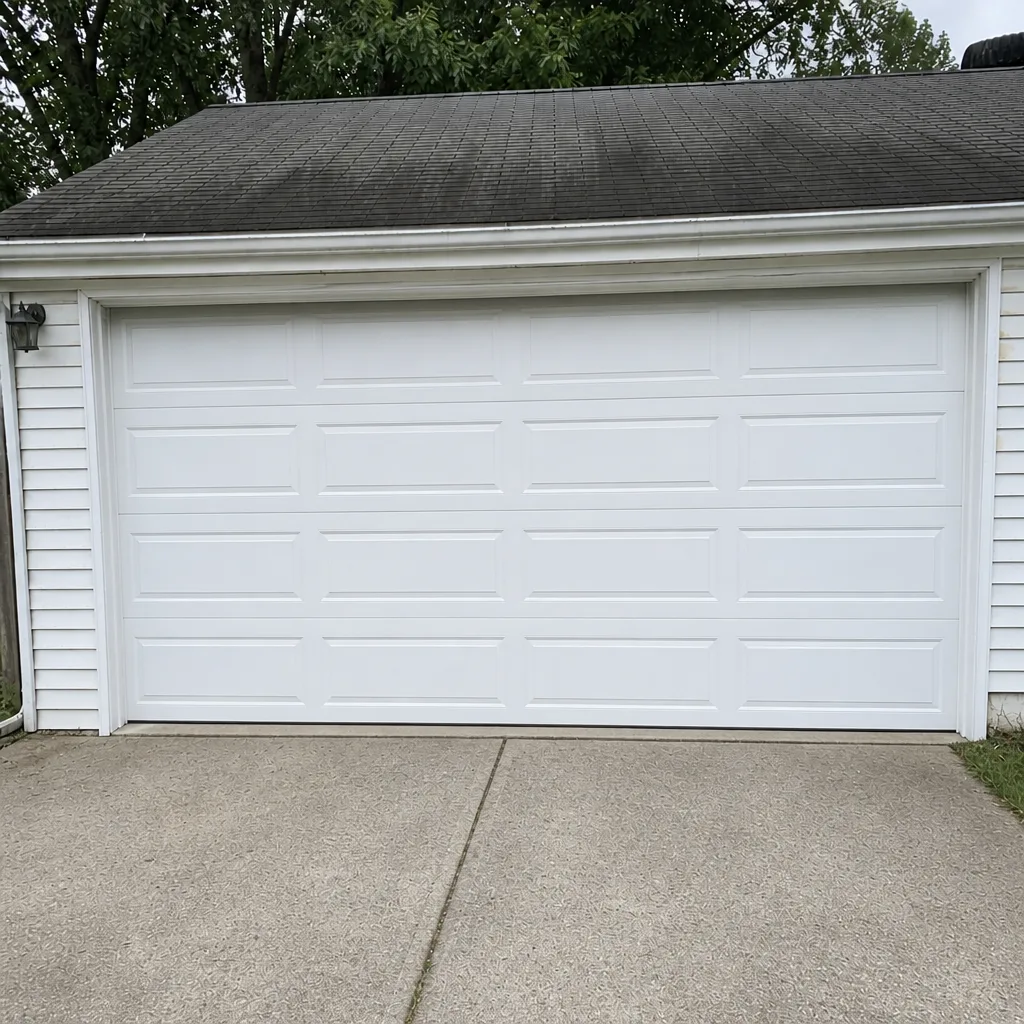
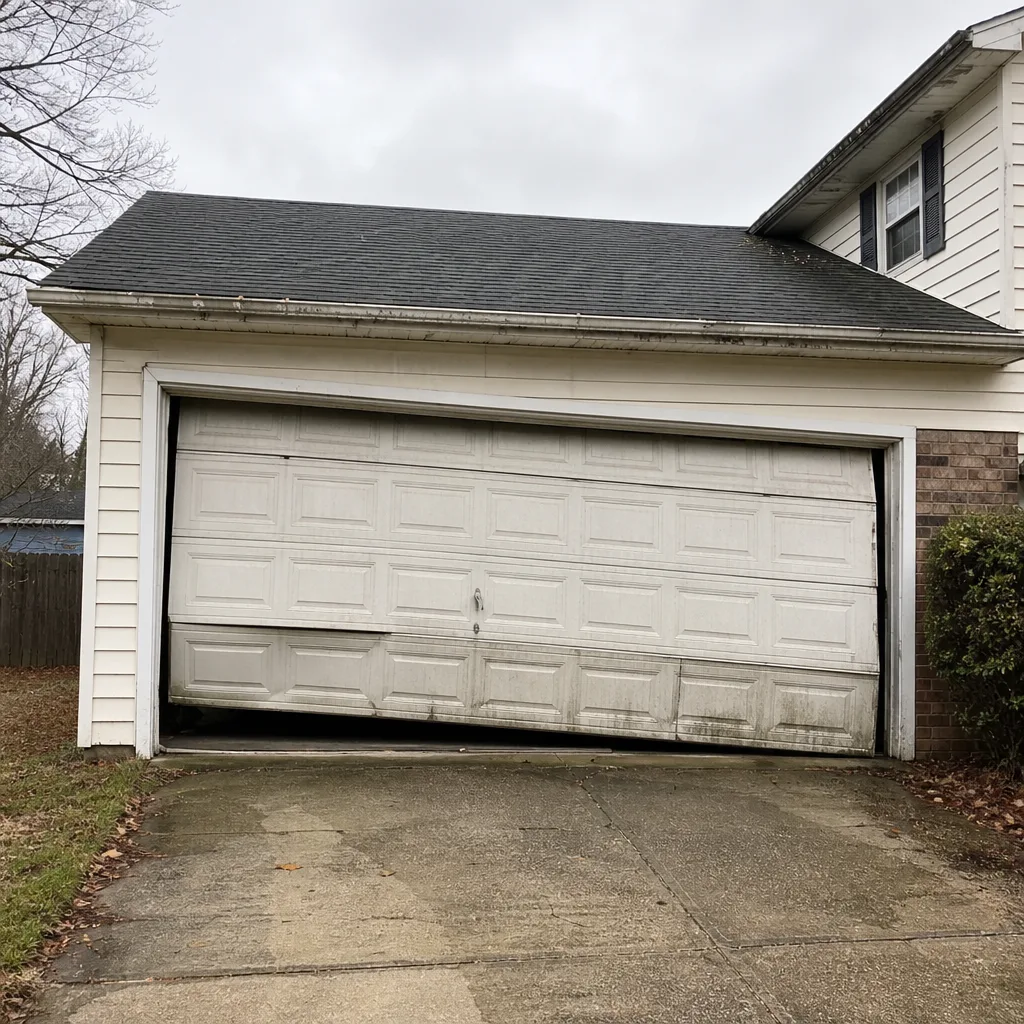
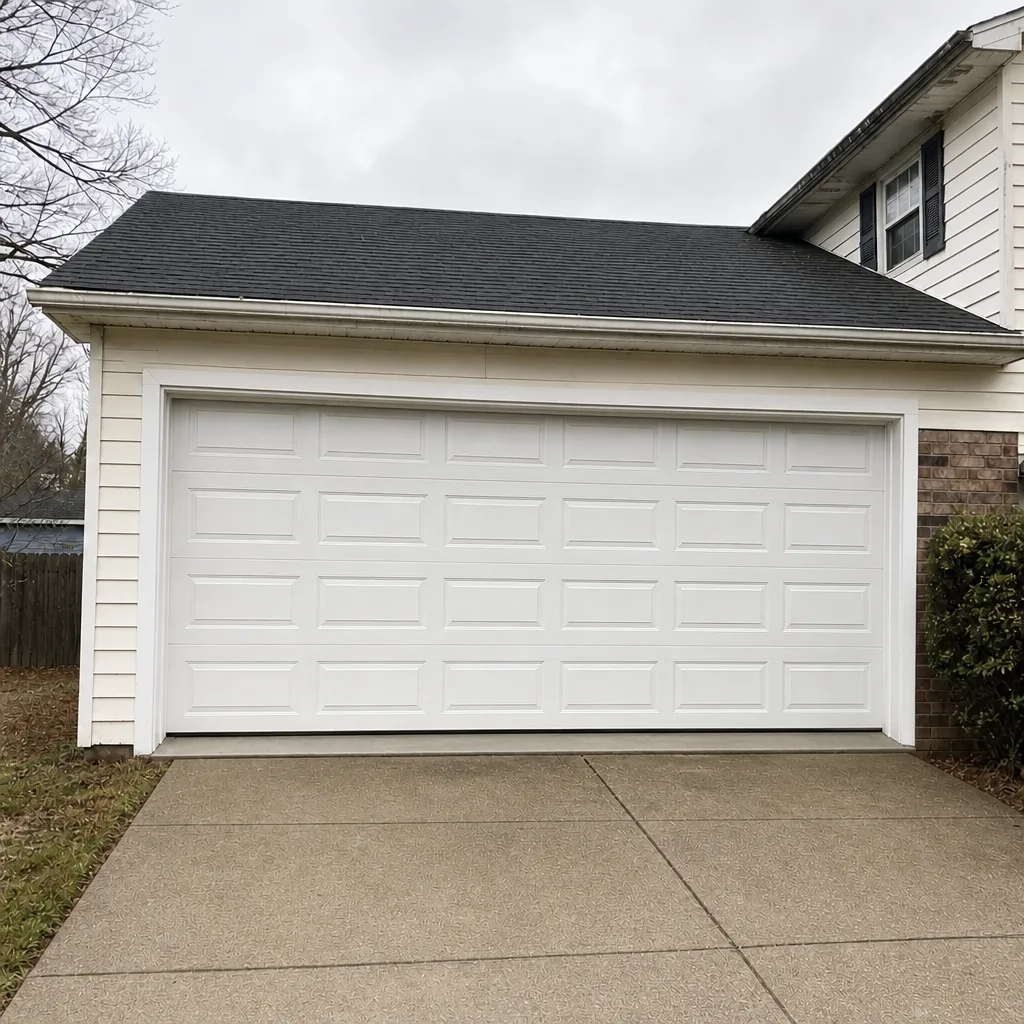
See the difference
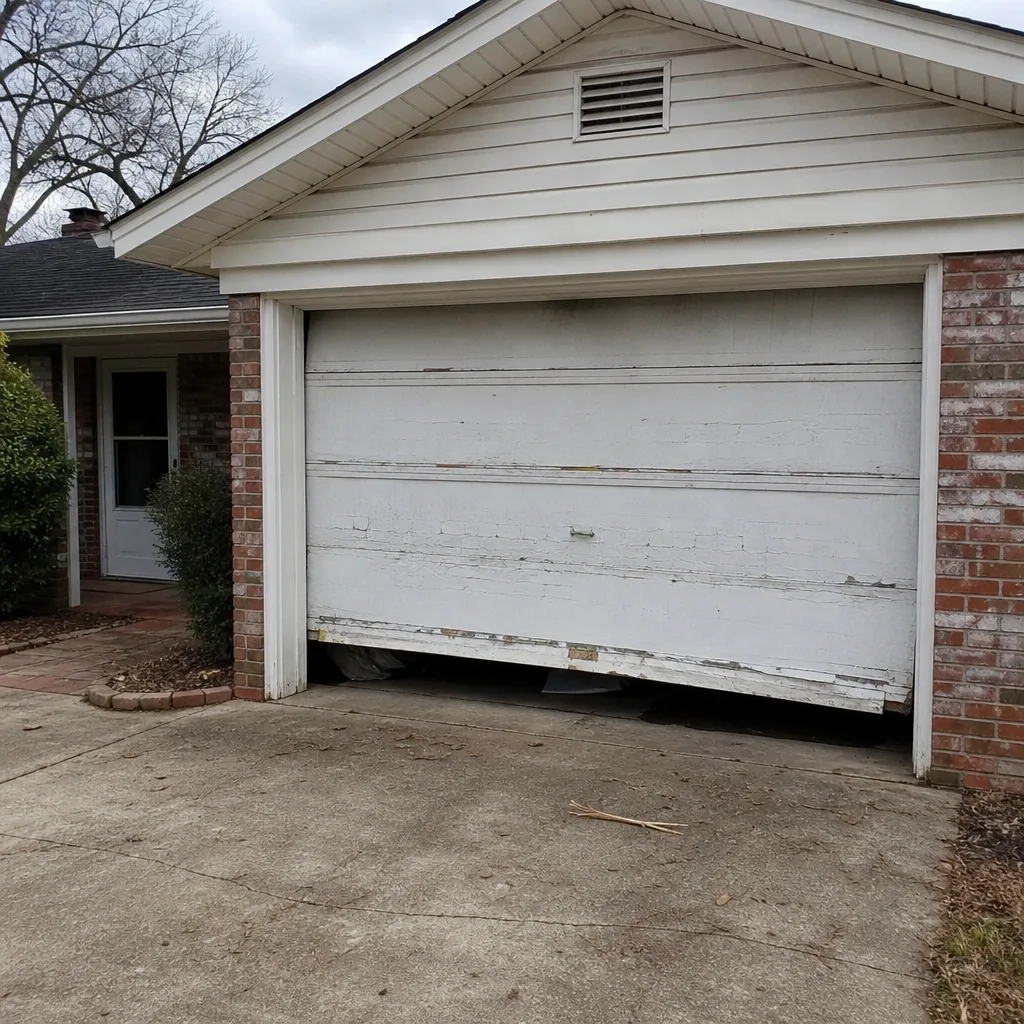 Before
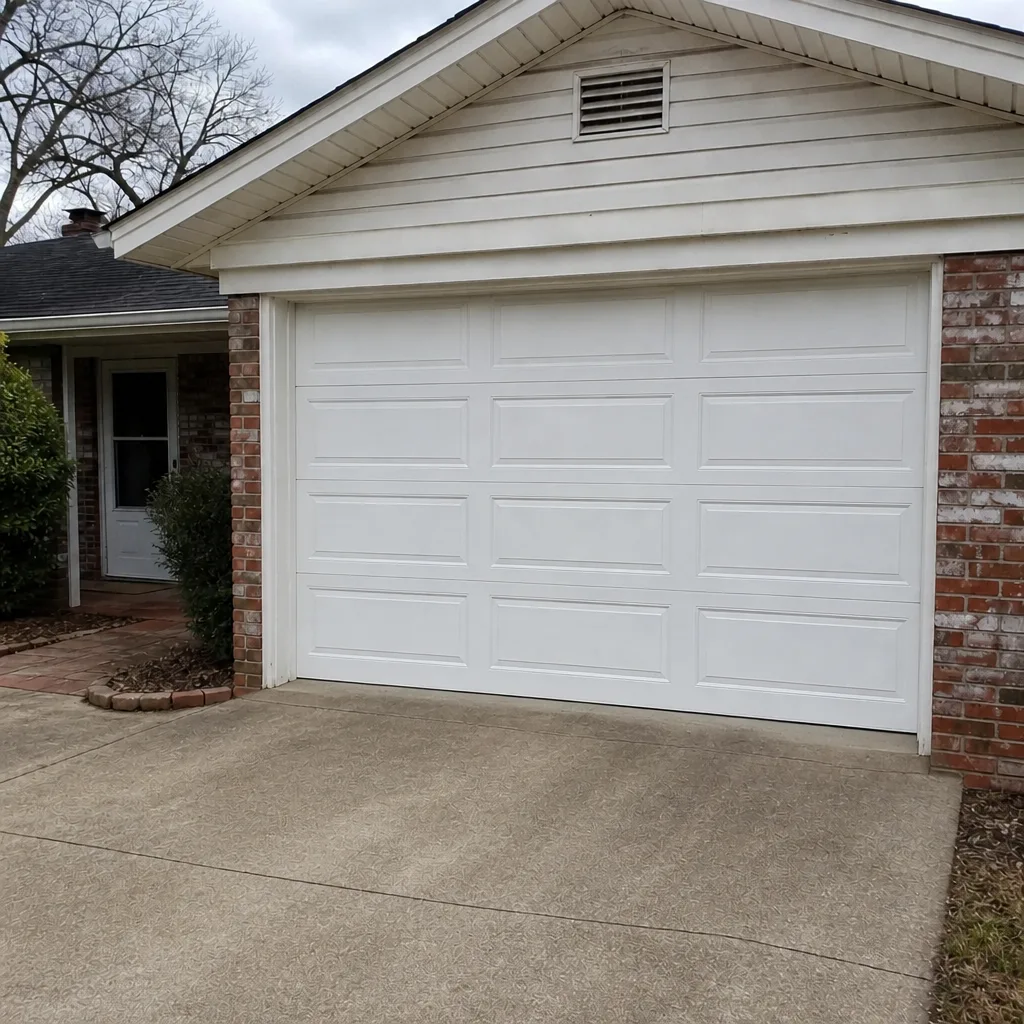 After
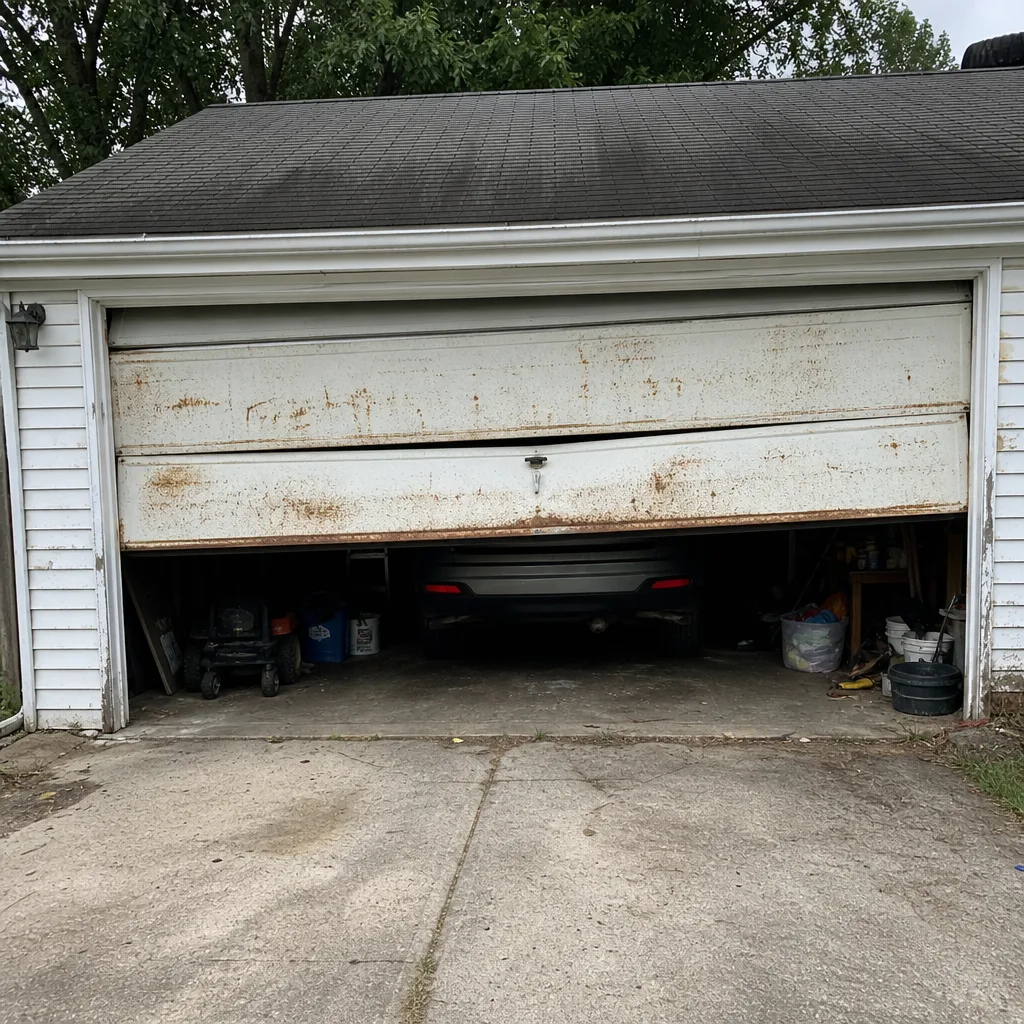 Before
 After
 Before
 After
When to Call a Professional
Some garage door tasks are safe to do yourself, and some genuinely aren’t. If you hear a loud pop from the spring, the door won’t stay in place during the balance test, a cable looks frayed or slack, or the door binds and refuses to travel evenly, stop using it and call a technician. The same goes for any noise that repeats and won’t quit after a lubrication pass, or for an opener whose force settings are off – that needs a trained set of eyes and the right tools. Your door is the largest moving object in your home, and it moves dozens of times a day. Springs, cables, and opener force settings all fall in the category of “leave this to a professional.” Garage Door Repair Newport News Pros offers free estimates in Newport News – call (877) 792-6582. We answer 24/7. Fast dispatch from 7am to 7pm, Sunday through Friday. If your door fails outside those hours, we’ll book you into the next opening.
Frequently Asked Questions
A garage door needs a monthly visual and audio check, seasonal lubrication and balance testing four times a year, and an annual deep inspection of springs, cables, and opener force settings. That split is more effective than a single yearly appointment because different parts wear on different timelines.
Use a dedicated garage door or spring lubricant, not a solvent spray like standard WD-40, which strips the protective coating and speeds up corrosion. Silicone or white lithium products work well on rollers and hinges. Call (877) 792-6582 for a free estimate on any repair – estimates are free.
A standard torsion spring is rated for about 10,000 cycles, and most Newport News households average roughly four opens a day, which works out to about seven years. Households that use the garage more heavily will hit that rating sooner. If your door is older and your spring has never been replaced, it’s worth having it checked.
No. Adjusting spring tension without the correct torque calculation is the task most often cited for voiding a garage door warranty, and it’s genuinely dangerous. A torsion spring stores a large amount of energy, and a slip can cause serious injury. Call (877) 792-6582 for a free estimate on a safe spring check.
Disconnect the opener by pulling the release handle, lift the door to about waist height, and let go. If it stays put, it’s balanced. If it drops, the springs need attention. A failed balance test is a reason to stop using the door until a technician checks it. We answer 24/7 – call (877) 792-6582.
Yes. A new door still needs the same monthly checks, seasonal lubrication, and annual deep inspection from day one. Following the schedule from the start is also the easiest way to protect the manufacturer’s warranty, since it documents that the door was maintained as specified.
The Bottom Line
A garage door doesn’t fail on a single clock. Its parts wear on different timelines, and treating them all to one vague annual checkup is why so many doors break without warning. Break your maintenance into three passes – month, season, year – and check the right part at the right time. Lubricate with the right product for each component, run the balance test every season, and leave spring tension and cable work to a technician. The maintenance log takes minutes to set up and tells the whole story of your door. Do that, and in Newport News you’ll spend most of your garage door energy wondering why you didn’t start sooner.
Questions about a specific door, spring, or opener? Give us a call. Garage Door Repair Newport News Pros offers free estimates in Newport News – call (877) 792-6582. We answer 24/7. Fast dispatch from 7am to 7pm, Sunday through Friday. If you’re planning a bigger change – an opener upgrade or a full replacement – a written quote from a reputable garage door opener repair professional is the first step, and a full garage door installation starts with the same free measurement and estimate.
Written by the team at Garage Door Repair Newport News Pros.